08 Nights / 09 Days
6 Person
From
₹ 30000.00
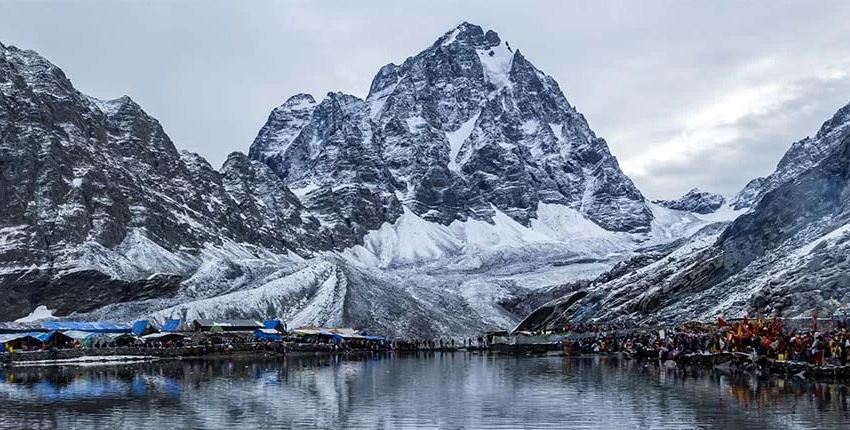
Book your slots ASAP Manimahesh Yatra Registration Starting on 5 August 2026 Hurry!
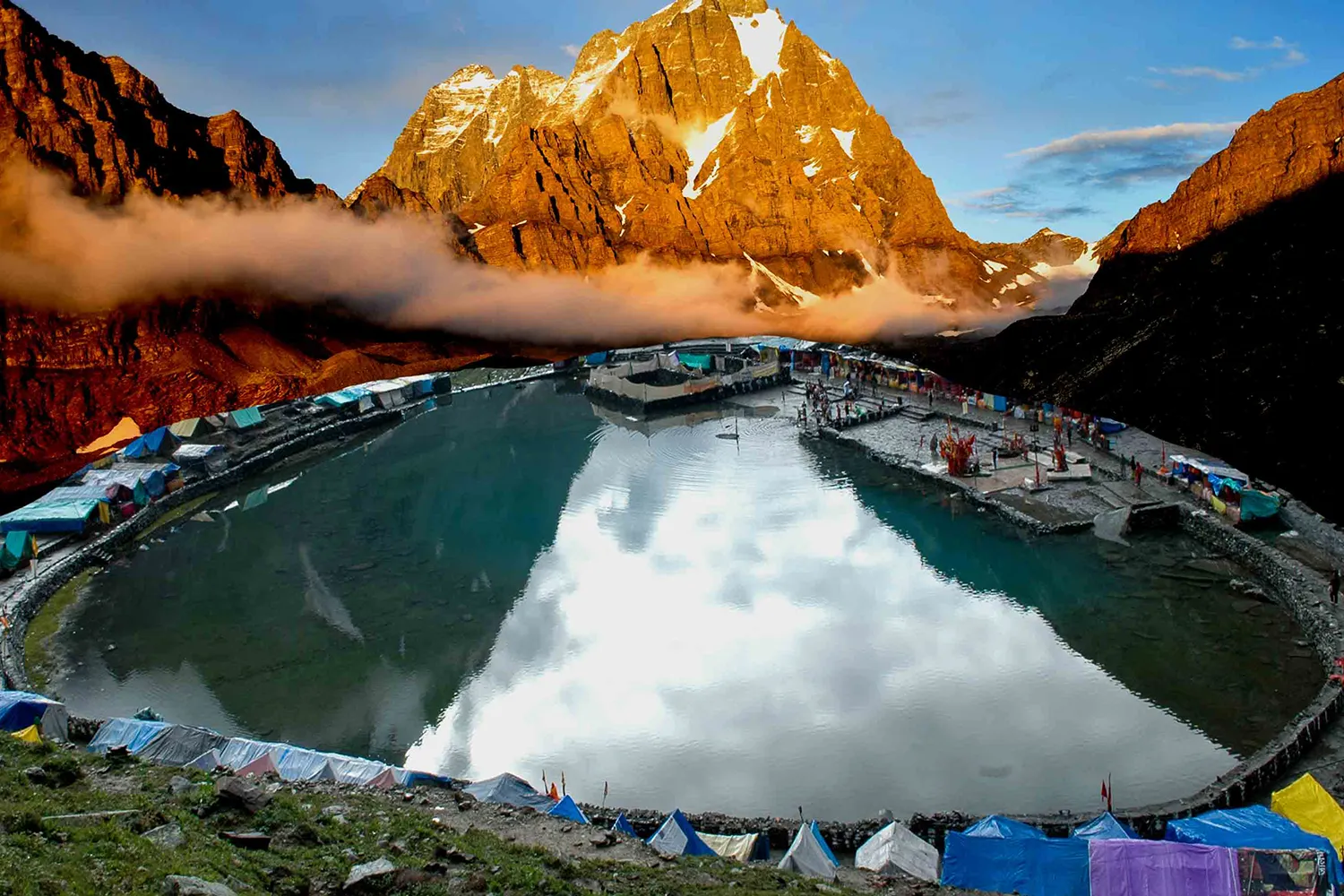
Every year, when the mountains of Himachal Pradesh echo with the chant of Har Har Mahadev, lakhs of devoted pilgrims set out on one of India's most sacred and soul-stirring journeys — the Manimahesh Yatra 2026. Tucked away in the Chamba district at an altitude of 4,080 metres, the holy Manimahesh Lake is believed to be the divine abode of Lord Shiva. Also known as Chamba Kailash, this sacred site stands at the foot of the mighty Manimahesh Kailash peak (5,653 metres) — a summit that, by local faith, no human being has ever conquered, for the mountain is protected by divine will.
Our 9 days Manimahesh Yatra package is thoughtfully designed for both first-time pilgrims and seasoned trekkers — covering the shaktipeeth darshan, the holy trek from Hadsar to Manimahesh Lake, acclimatization days, sightseeing, and a comfortable return journey.
The Manimahesh Yatra 2026 start date is 4 September 2026 (Chota Snan / Janmashtami) and the grand finale is 19 September 2026 (Bada Snan / Radha Ashtami).
| Occasion | Date | Day |
| Chota Snan — Yatra Begins | 4 September 2026 | Friday |
| Bada Snan — Yatra Ends | 19 September 2026 | Saturday |
| Trek Season (General) | May 10 – October 10, 2026 | — |
The lunar shift in 2026 has pushed the yatra about three weeks later compared to 2025 — meaning it will be colder near the lake and mountain weather will be more temperamental than usual. Pilgrims are advised to carry extra warm layers and plan buffer days for potential weather disruptions, especially for the helicopter service.
The pilgrimage follows the Hindu lunar calendar, beginning on the auspicious Janmashtami (Chota Snan) — the first holy dip — and concluding on Radha Ashtami (Bada Snan) — the most sacred and most crowded bathing day of the entire yatra. Book early for these peak dates.
Imagine a trek covered with foggy Himalayan paths, hearing "Har Har Mahadev" echo in the valleys, and then unexpectedly seeing a heavenly lake reflecting a snow-covered peak thought to be Lord Shiva's dwelling. Manimahesh Yatra is something like that.
This pilgrimage is deeply rooted in the shaktipeeth tradition of North India. Before ascending to the lake, every devotee must first seek the blessings of Bharmani Mata — the presiding shaktipeeth of Bharmour. It is believed that Goddess Brahmani Devi was granted a divine boon by Lord Shiva that all pilgrims heading to Manimahesh must first bathe in her holy kund. Failing this, the yatra is considered incomplete and unaccepted by Lord Shiva. This shaktipeeth bath is not optional — it is the spiritual foundation of the entire pilgrimage.
The lake's name itself carries deep meaning. "Mani" means the divine jewel, and "Mahesh" is another name for Lord Shiva. The lake is believed to reflect the luminous gem on Shiva's crown. The Yatra is also part of the Panch Kailash Yatras — which include Kailash Mansarovar, Shrikhand Kailash, Kinnaur Kailash, and Adi Kailash — making it one of the most important pilgrimage circuits for Shiva devotees.
Manimahesh Yatra registration has been made compulsory by the Government of Himachal Pradesh in 2026 to ensure the safety and security of devotees. Registration is open online. A registration fee of ₹50 will be charged online or offline on arrival at Bharmour.
One mobile number can submit one application covering up to five persons. By beginning registration early, the administration aims to reduce overcrowding and enhance safety measures for pilgrims.
Registration is not a mere formality — it is your safety net in the high Himalayas. Medical rescue teams, emergency operations, and pilgrim tracking systems all operate on the basis of registered data. Do not skip it.
For senior pilgrims, devotees with health limitations, or those short on time, the helicopter service makes Manimahesh darshan accessible to all.
The helicopter route connects Bharmour (the base camp town) to Gauri Kund, the nearest helicopter landing point to Manimahesh Lake. The Manimahesh Yatra Trust offers a fully digital ticket booking process for helicopter services. Official booking website: manimaheshyatra.hp.gov.in/heli
After landing at Gauri Kund, pilgrims walk approximately 1 km uphill to reach the sacred lake — making it a manageable option even for those who cannot undertake the full 13 km trek on foot.
Main Route (Most Popular):
Hadsar → Dhancho (7 km) → Sundrasi → Gauri Kund → Manimahesh Lake (6 km)
Total one-way distance: ~13–14 km | Altitude: 2,280 m to 4,080 m
Alternate Offbeat Routes:
Via Kugti Pass (Parikrama Route) — A longer and far more challenging trail via Kugti village, Chobu Pass, and Kamal Kund. Ideal for experienced trekkers seeking the full spiritual parikrama experience. This route passes through Kugti, Kartik Temple, Dalotu, and a high-altitude base camp before reaching Manimahesh. Recommended only for fit, experienced trekkers.
Via Lahaul-Spiti through Kugti Pass — Extremely difficult, recommended only for seasoned mountaineers with prior high-altitude expedition experience.
For trekkers, the broader trekking season lasts from June to October. June and July offer lush green meadows, while September provides clearer skies and excellent mountain views.
By Air: Nearest airport — Gaggal Airport, Kangra (~170 km from Bharmour). Taxis available to Chamba and onward to Bharmour.
By Train: Nearest railway station — Pathankot (~180 km from Bharmour). Well-connected to Delhi, Amritsar, and Chandigarh.
By Road: Bharmour is connected by road from Pathankot, Chamba, and Dharamshala. The drive from Pathankot takes approximately 5–6 hours through the scenic Ravi valley. HRTC buses and shared taxis are available from Chamba to Bharmour.
Given the 2026 yatra falls in mid-September — later and colder than usual — packing right is especially important this year.
Manimahesh Lake sits at 4,080 metres — altitude sickness is a real concern for anyone ascending too fast. Our 9 days itinerary specifically builds in an acclimatization day at Bharmour (Day 4) before the trek begins, which significantly reduces the risk.
Start cardiovascular exercise two to three months before the journey and build mental strength for high-altitude trekking. Take time for acclimatization, drink plenty of water, stay updated about weather conditions, and travel with a group rather than individually.
Senior citizens and those with heart, respiratory, or blood pressure conditions must carry a medical fitness certificate and consult their doctor before booking. Ponies (ghoda) and palanquins (palki) are available on the trail from Hadsar for those who need physical support on the climb.
Free langar (community meals served by local organisations and Gaddi communities) is available at multiple points along the route during the yatra season — a beautiful tradition of Himachali devotion and hospitality that ensures no pilgrim goes hungry on the trail.
Jai Manimahesh | Har Har Mahadev
Book your 2026 Manimahesh Yatra package online today with Divya Yatra.
Slots for the sacred Bada Snan dates on 19 September 2026 fill up weeks in advance — don't wait.
The yatra officially begins on 4 September 2026 (Janmashtami / Chota Snan) and concludes on 19 September 2026 (Radha Ashtami / Bada Snan). General trekking is open from May 10 to October 10, 2026.
Yes. Registration is compulsory for all pilgrims as mandated by the Government of Himachal Pradesh. Online registration is available at the official HP government portal. One mobile number can register up to 5 persons in a single application.
The trek from Hadsar to the lake and back can be completed in 3–4 days. Our 9 days package includes travel, sightseeing, acclimatization, the complete pilgrimage, and return — designed to be unhurried and spiritually fulfilling.
The main route is: Bharmour → Hadsar (by jeep) → Dhancho → Sundrasi → Gauri Kund → Manimahesh Lake. Total trek: approximately 13–14 km one way.
Yes, senior citizens can participate if they are medically fit. Pony and palki services are also available on the trekking route.
Registration requirements may vary each year according to government guidelines. Travelers should check the latest updates before planning their journey.
You can book directly through our website - www.divyayatra.com . Select your preferred package, fill in the booking form with your group details, and confirm with an advance payment. We take care of your registration assistance, transport, accommodation, trekking guide, and all ground arrangements — so you can focus entirely on the pilgrimage.
The main trek (Hadsar to the lake) is a moderate-to-challenging 13–14 km trail with significant altitude gain. Anyone with basic fitness and prior preparation can complete it. The 2026 yatra falling in mid-September means colder temperatures — prepare accordingly.
Yes, food stalls, langars, and refreshment points are available at various locations during the yatra season.
Manimahesh Lake is considered one of the holiest pilgrimage sites dedicated to Lord Shiva. Devotees believe that taking a holy dip in the lake brings spiritual blessings.
The official yatra is a Hindu pilgrimage dedicated to Lord Shiva. However, the trek to Manimahesh Lake is open to all — trekkers, nature lovers, and travellers are welcome outside the formal yatra window.

26 Packages

12 Packages

22 Packages
.png)
5 Packages

7 Packages

13 Packages
.png)
7 Packages

7 Packages
5 Packages
4 Packages
18 Packages
13 Packages
.jpg)
13 Packages
0 Packages
.jpeg)
4 Packages
2 Packages
23 Packages
19 Packages
5 Packages
.jpeg)
9 Packages
1 Packages
5 Nights / 6 Days
6 Person
From
₹ 15,500.00
11 Night / 12 Days
6 Person
From
₹ 25,000.00

5 Night/ 6 Days
6 Person
From
₹ 18,000.00
4 Night / 5 Days
6 Person
From
₹ 13,500.00
3 Night / 4 Days
6 Person
From
₹ 11,000.00
4 Night / 5 Days
6 Person
From
₹ 18,000.00
3 Night / 4 Days
6 Person
From
₹ 12,000.00
3 Night / 4 Days
6 Person
From
₹ 15,000.00
4 Night / 5 Days
6 Person
From
₹ 18,000.00
8 Night/ 9 Days
6 Person
From
₹ 25,000.00
4 Night / 5 Days
6 Person
From
₹ 15,000.00
4 Night / 5 Days
6 Person
From
₹ 12,500.00
2 Night / 3 Days
6 Person
From
₹ 7,000.00
8 Night / 9 Days
6 Person
From
₹ 20,000.00
6 Night/ 7 Days
6 Person
From
₹ 0.00
7 Night/ 8 Days
6 Person
From
₹ 60,000.00
5 Night/ 6 Days
6 Person
From
₹ 35,000.00
4 Night / 5 Days
6 Person
From
₹ 20,000.00
Travelling with Divya Yatra Pvt. Ltd. was truly an exceptional experience. The team was not only professional but also genuinely caring and attentive to every detail. From start to finish, the journey was smooth, well-managed, and filled with memorable moments. Their commitment to quality service and customer satisfaction truly sets them apart. I wholeheartedly recommend Divya Yatra Pvt. Ltd. to anyone looking for a trustworthy and enriching travel experience.

excellent service Divya yatra pvt ltd thanks 👍
Our tour with Divya Yatra was a true cultural immersion.The guides passionate stories made history feel alive, leaving us with unforgettable memories and a deeper connection to the places we visited. really recommend.
Booked Kailash mansarovar tour ex Kathmandu best service hotel transport gouide
Very nice sarvice Gujarat tour .......good driver and very nice arrangement by tour agent Abhay ji
This is best travel Website ❤️
Booked chardham tour this travel company nice arrangements. Thanks
